

AI-Designed Cars: A New Era of Automotive Innovation
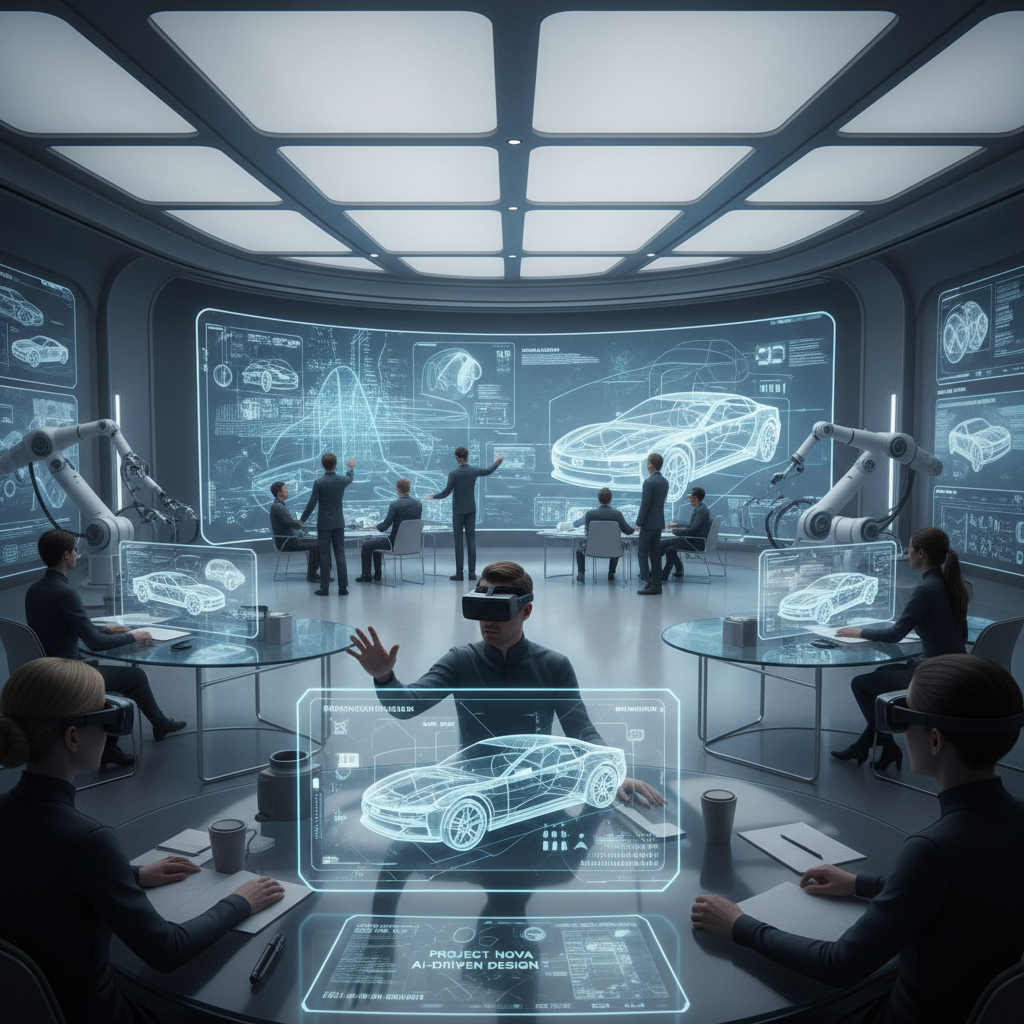
The advent of AI-designed cars marks a significant turning point in the automotive industry. For decades, car design has been a labor-intensive process, relying on human intuition and manual iteration. However, with the emergence of advanced 3D visualization tools and VR sculpting platforms, the industry is on the cusp of a radical transformation. To understand the implications of this shift, it is essential to examine the historical context that has led to this point. Related: AI-designed cars.
Historical Context: The Evolution of Car Design
In the early 2010s, car manufacturers began to adopt computer-aided design (CAD) software, which enabled them to create digital models of their vehicles. This marked a significant improvement over traditional sketch-based design methods. However, CAD software had its limitations, particularly when it came to the iterative process of refining designs. The introduction of 3D visualization tools and VR sculpting platforms in the mid-2010s helped to address some of these limitations, allowing designers to create more immersive and interactive experiences. Despite these advancements, the design process remained largely manual, with human designers playing a central role in the creation and refinement of vehicle designs.
Competitive Analysis: The Rise of AI-Driven Design
The integration of AI in car design is poised to disrupt the competitive landscape of the automotive industry. Companies like General Motors and Nissan are already investing heavily in AI-driven design, recognizing the potential for significant cost savings, improved efficiency, and enhanced innovation. For instance, AI algorithms can analyze vast amounts of data, identify patterns, and generate designs that meet specific performance and aesthetic criteria. This enables manufacturers to explore a wider range of design options, reducing the need for physical prototypes and accelerating the development process. As a result, companies that adopt AI-driven design will be better positioned to respond to changing consumer preferences, regulatory requirements, and technological advancements. Our AI analysis explores this further.
Winner and Losers
The adoption of AI-driven design will have significant implications for industry players. Winners will include companies that invest early and heavily in AI technology, such as General Motors and Nissan. These companies will be able to leverage AI to improve their design processes, reduce costs, and bring innovative products to market faster. Losers, on the other hand, will be companies that fail to adapt to the changing landscape. These companies will struggle to compete with their more agile and innovative counterparts, potentially leading to market share losses and decreased profitability.
Second-Order Effects: The Ripple Effects of AI-Designed Cars
The adoption of AI-designed cars will have far-reaching implications that extend beyond the automotive industry. For instance, the use of AI in car design will drive demand for advanced computing hardware, software, and data storage solutions. This will create new opportunities for technology companies that specialize in these areas. Additionally, the increased use of AI in car design will require significant investments in education and training, as designers and engineers will need to develop new skills to work effectively with AI algorithms. Finally, the integration of AI in car design will raise important questions about the role of human designers and engineers in the development process, potentially leading to new debates about the ethics and responsibilities of AI-driven innovation. Related: AI-designed cars.
Technical Deep Dive: The Underlying Technology
The AI algorithms used in car design are based on a range of techniques, including generative adversarial networks (GANs), neural networks, and deep learning. These algorithms are trained on vast amounts of data, including images, videos, and sensor readings. By analyzing this data, AI algorithms can generate designs that meet specific performance and aesthetic criteria. For example, GANs can be used to generate designs that are optimized for aerodynamics, while neural networks can be used to create designs that are tailored to specific consumer preferences. The use of these algorithms enables manufacturers to explore a wide range of design options, reducing the need for physical prototypes and accelerating the development process.
Contrarian Take: The Limitations of AI-Driven Design
While AI-driven design has the potential to revolutionize the automotive industry, it is essential to recognize the limitations of this technology. For instance, AI algorithms are only as good as the data they are trained on, and biases in the data can result in designs that are flawed or suboptimal. Additionally, the use of AI in car design raises important questions about the role of human designers and engineers in the development process. While AI can generate designs that are optimized for specific performance and aesthetic criteria, human intuition and creativity are still essential for creating vehicles that are desirable, functional, and safe. As a result, manufacturers must strike a balance between the use of AI and human input, recognizing the strengths and limitations of each approach.
Builder Perspective: Preparing for an AI-Driven Future
As the automotive industry continues to evolve, it is essential for manufacturers, suppliers, and consumers to prepare for an AI-driven future. This requires investing in education and training, developing new skills, and embracing a culture of innovation and experimentation. For instance, designers and engineers will need to develop expertise in AI algorithms, data analysis, and software development. Additionally, manufacturers will need to invest in advanced computing hardware, software, and data storage solutions to support the use of AI in car design. By taking these steps, industry players can position themselves for success in an AI-driven future, leveraging the potential of this technology to create innovative, desirable, and functional vehicles.
In conclusion, the adoption of AI-designed cars marks a significant turning point in the automotive industry. As manufacturers continue to invest in AI-driven design, we can expect to see significant improvements in efficiency, innovation, and competitiveness. However, it is essential to recognize the limitations of this technology and to strike a balance between the use of AI and human input. By preparing for an AI-driven future, industry players can position themselves for success, leveraging the potential of this technology to create a new era of automotive innovation. Related: AI-designed cars.