

BMW's Color-Changing Cars: A New Era of Automotive Tech
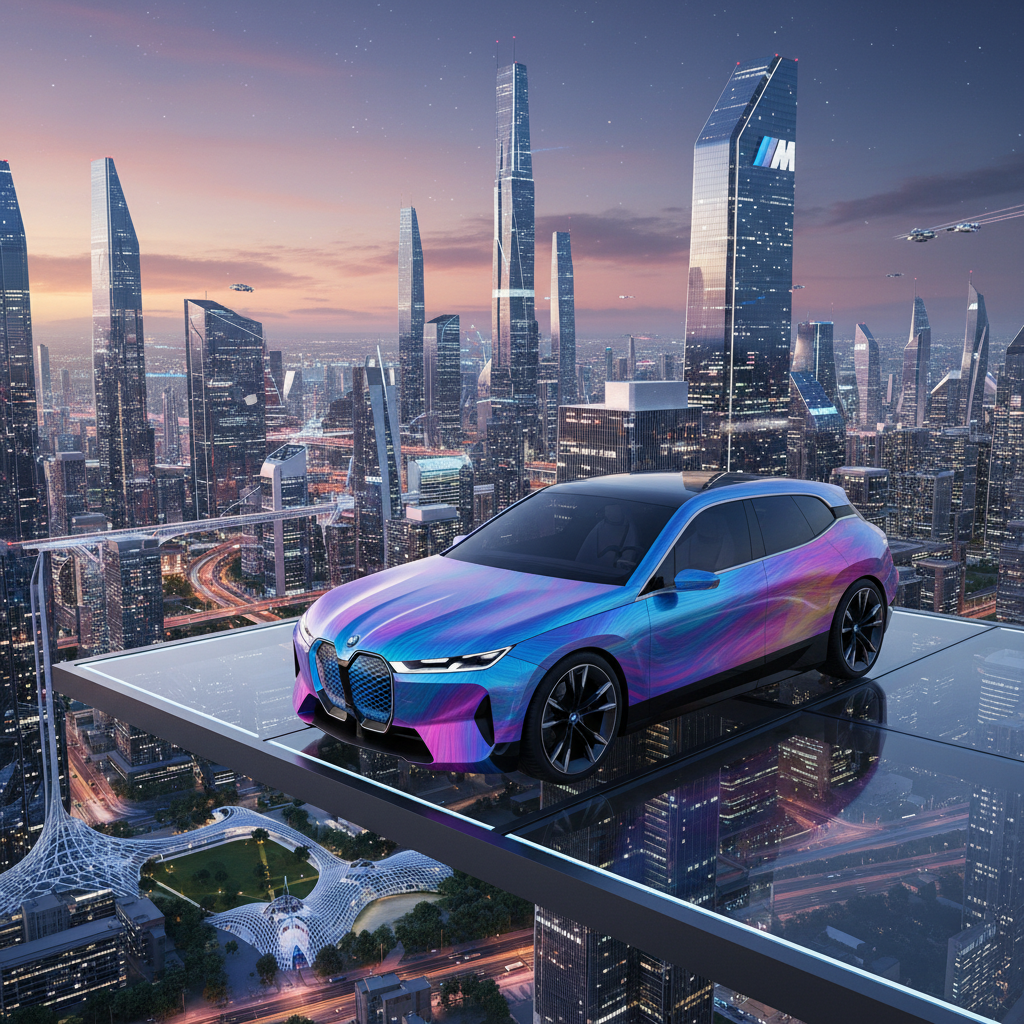
BMW's recent unveiling of its color-changing car concepts, including the BMW iX Flow, BMW i Vision Dee, and BMW i5 Flow Nostokana, marks a significant milestone in the automotive industry's adoption of innovative technologies. The use of E Ink panels, commonly found in e-readers, to dynamically alter the appearance of a vehicle's exterior is a game-changer. But to truly understand the implications of this development, it's essential to examine the historical context that led to this point.
Historical Context: The Evolution of Automotive Technology
In 2019, BMW filed a patent for a color-changing car wrap, which was initially met with skepticism. However, this early exploration of dynamic exterior design laid the groundwork for the company's current E Ink-based concepts. Meanwhile, other manufacturers, such as Toyota and Nissan, have been experimenting with similar technologies, including shape-memory alloys and electrochromic materials. The convergence of these innovations has brought the industry to a tipping point, where the possibilities for vehicle design and customization are expanding exponentially.
Competitive Analysis: The E Ink Advantage
BMW's E Ink-based approach gives the company a significant edge over its competitors. The technology offers a unique combination of flexibility, sustainability, and cost-effectiveness. Unlike traditional paint or wrap-based designs, E Ink panels can be easily updated or changed, reducing waste and minimizing the environmental impact of production. This advantage will be particularly important as the industry shifts towards more sustainable and eco-friendly practices. Toyota, for example, has been investing heavily in its own dynamic design technologies, but its reliance on shape-memory alloys may prove more expensive and less versatile than BMW's E Ink solution. Related: BMW.
Technical Deep Dive: The Science Behind E Ink
E Ink technology relies on the principles of electrophoresis, where microscopic particles are suspended in a fluid and manipulated by an electric field. This process allows for the creation of high-contrast, low-power displays that can be integrated into a variety of surfaces, including the exterior of a vehicle. The color E Ink panels used in BMW's concept cars employ a similar mechanism, with the added capability of displaying a range of colors. As the technology continues to evolve, we can expect to see further advancements in resolution, color gamut, and durability, paving the way for widespread adoption in the automotive industry.
Second-Order Effects: The Future of Automotive Design and Manufacturing
The integration of E Ink technology into vehicle design will have far-reaching consequences for the automotive industry. As manufacturers begin to adopt this technology, we can expect to see a shift towards more modular and adaptable production processes. The ability to easily update or change a vehicle's exterior design will reduce the need for costly and time-consuming redesigns, allowing companies to respond more quickly to changing consumer preferences and market trends. Additionally, the use of E Ink panels will enable the creation of new business models, such as subscription-based design services, where owners can change their vehicle's appearance on a regular basis.
Forward-Looking Predictions: The Road Ahead
By 2025, we predict that at least three major automotive manufacturers will have integrated E Ink technology into their production vehicles. BMW, with its head start, will be at the forefront of this trend, but companies like Toyota and Volkswagen will be close behind. As the technology improves and costs decrease, we can expect to see a proliferation of color-changing vehicles on the market, with the potential for entirely new design languages and brand identities to emerge. The implications for the automotive industry will be profound, with E Ink technology playing a key role in shaping the future of vehicle design, manufacturing, and ownership.