
Groq's Post-Deal Playbook: AI Chipmaker's Bold Moves
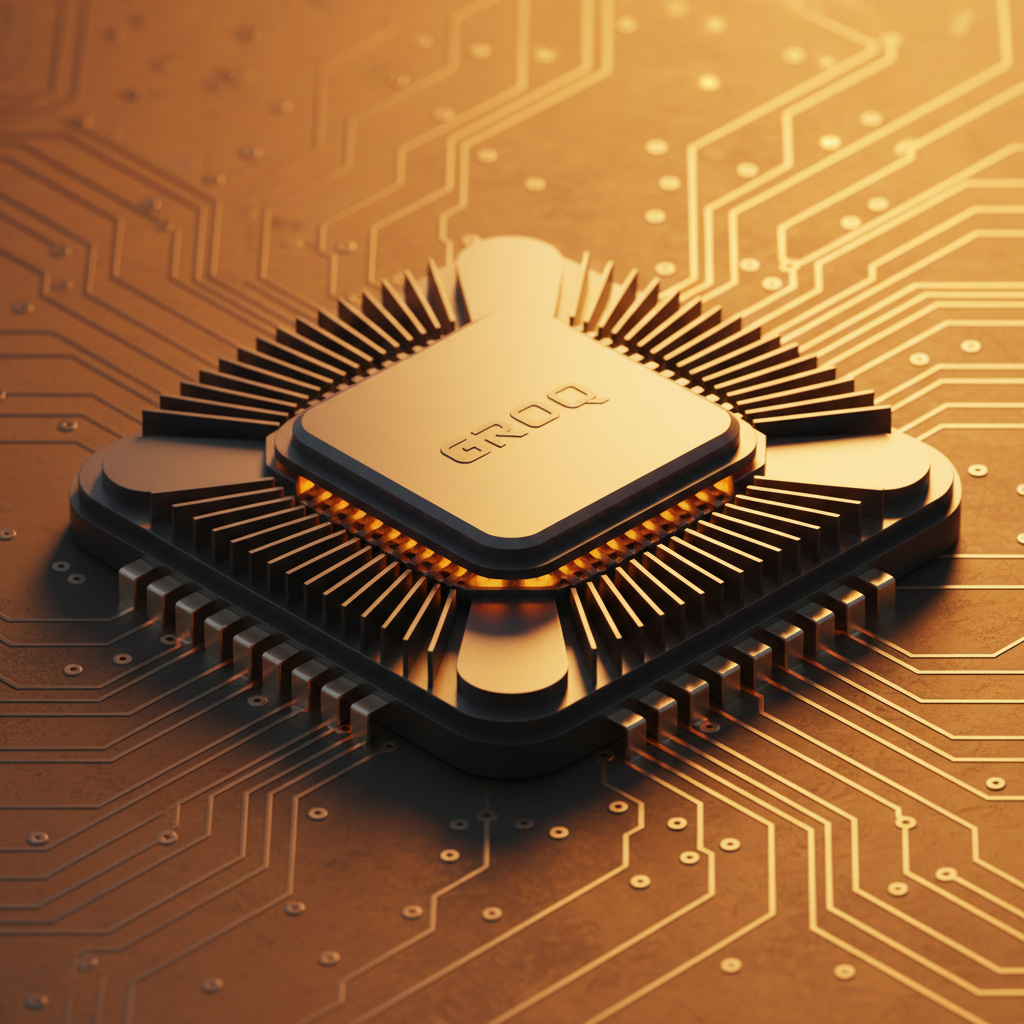
Illustration, not documentary evidence of the event.
Groq's recent $650M raise and hiring spree mark a significant turning point for the AI chipmaker, as it navigates the aftermath of Nvidia's $20B not-acqui-hire deal. This bold move signals a strategic shift in Groq's business, with a renewed focus on its neocloud offerings. But what's driving this change, and how will it impact the broader AI landscape? AI chipmaking offers additional context on this topic.
Technical Deep Dive
Groq's AI chipmaking expertise is built around its proprietary tensor processing unit (TPU) architecture, which provides a significant boost in performance and power efficiency for machine learning workloads. The company's neocloud business, in particular, is designed to provide a scalable, cloud-based infrastructure for AI model training and deployment. By leveraging its TPU technology, Groq can offer a unique value proposition to customers, including improved model accuracy, reduced training times, and lower costs. AI chipmaking offers additional context on this topic.
From a technical standpoint, Groq's TPU architecture is based on a novel combination of systolic arrays and sparse matrix multiplication, which enables the company to achieve exceptional performance and power efficiency. This is particularly important in the context of large-scale AI model training, where power consumption and heat dissipation can become major bottlenecks. By optimizing its TPU design for these workloads, Groq can provide a significant advantage to customers, including improved model accuracy and reduced training times.
Industry Impact
Groq's renewed focus on its neocloud business has significant implications for the broader AI industry. As one of the leading AI chipmakers, Groq is well-positioned to capitalize on the growing demand for cloud-based AI infrastructure. The company's TPU technology, combined with its neocloud offerings, provides a unique value proposition to customers, including improved model accuracy, reduced training times, and lower costs. This is likely to put pressure on rival AI chipmakers, including Nvidia, to respond with their own cloud-based offerings. Our Nvidia analysis explores this further.
From a competitive standpoint, Groq's move is likely to be seen as a challenge to Nvidia's dominance in the AI chipmaking market. Nvidia's $20B not-acqui-hire deal with Arm has given the company a significant boost in terms of its AI capabilities, but Groq's renewed focus on its neocloud business suggests that the company is not intimidated. Instead, Groq is doubling down on its strengths, including its TPU technology and neocloud offerings, in an effort to carve out a unique niche in the market. AI chipmaking offers additional context on this topic.
Market Structure Analysis
Groq's $650M raise and hiring spree also have significant implications for the broader market structure of the AI industry. The company's renewed focus on its neocloud business suggests that the market is shifting towards a more cloud-based, infrastructure-as-a-service (IaaS) model. This is likely to put pressure on traditional AI chipmakers, including Nvidia, to adapt to this new reality. At the same time, it creates opportunities for new entrants, including cloud-based AI startups, to capitalize on the growing demand for cloud-based AI infrastructure. Our Nvidia analysis explores this further.
Frequently Asked Questions
How does Groq's neocloud business compare to Nvidia's AI offerings?
Groq's neocloud business is designed to provide a scalable, cloud-based infrastructure for AI model training and deployment, whereas Nvidia's AI offerings are primarily focused on providing AI acceleration hardware for on-premises deployments. While Nvidia's hardware is widely used in the AI industry, Groq's neocloud business provides a unique value proposition to customers, including improved model accuracy, reduced training times, and lower costs.
What does this mean for developers using Groq's AI chipmaking technology?
For developers using Groq's AI chipmaking technology, the company's renewed focus on its neocloud business is likely to provide a significant boost in terms of performance, power efficiency, and scalability. Groq's TPU technology, combined with its neocloud offerings, provides a unique value proposition to customers, including improved model accuracy, reduced training times, and lower costs. This is likely to make Groq's technology more attractive to developers, particularly those working on large-scale AI model training and deployment projects. AI chipmaking offers additional context on this topic.
How will Groq's $650M raise impact the broader AI industry?
Groq's $650M raise is likely to have a significant impact on the broader AI industry, as it signals a renewed focus on cloud-based AI infrastructure. This is likely to put pressure on traditional AI chipmakers, including Nvidia, to adapt to this new reality. At the same time, it creates opportunities for new entrants, including cloud-based AI startups, to capitalize on the growing demand for cloud-based AI infrastructure.
Groq's bold move is likely to pay off in the long run, as the company is well-positioned to capitalize on the growing demand for cloud-based AI infrastructure. With its TPU technology and neocloud offerings, Groq is providing a unique value proposition to customers, including improved model accuracy, reduced training times, and lower costs. As the AI industry continues to evolve, it will be interesting to see how Groq's competitors respond to this challenge, and how the company's neocloud business continues to grow and evolve.