

Leakage Liability: The Unseen Consequences of Hollywood's Digital Age
The arrest of a 26-year-old man in Singapore for allegedly leaking Paramount's new Avatar movie raises questions about the vulnerabilities of Hollywood's dig...
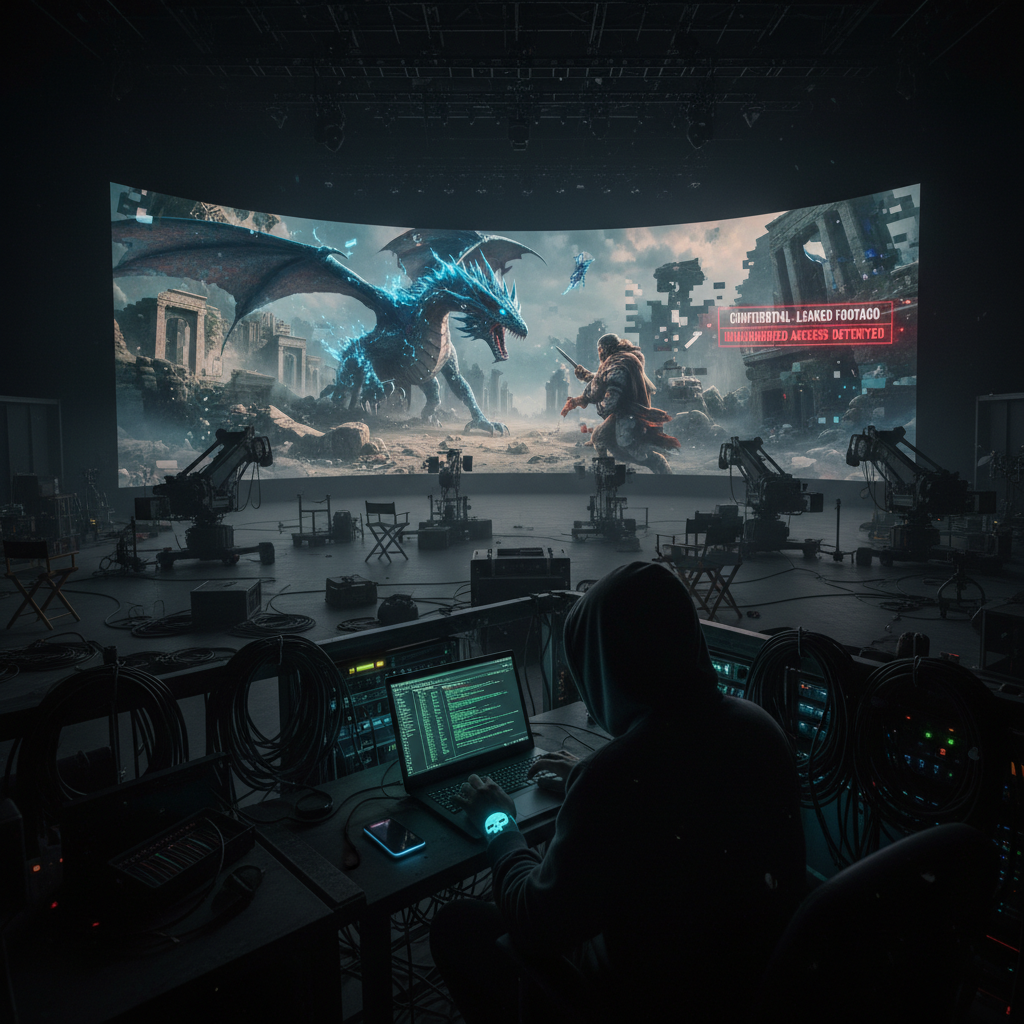
The recent arrest of a suspect in connection with the leak of Paramount's new Avatar movie is more than just a isolated incident - it's a symptom of a broader issue plaguing the entertainment industry. As studios increasingly rely on digital platforms to distribute their content, the risk of piracy and leakage has become a major concern. The fact that a 26-year-old man in Singapore was able to allegedly upload the movie onto the internet highlights the vulnerabilities of Hollywood's digital infrastructure.
Historical Context: The Rise of Digital Piracy
In 2019, a report by the Digital Citizens Alliance estimated that digital piracy costs the US entertainment industry around $29.2 billion annually. This number has likely increased since then, as more content has shifted online. The rise of streaming services like Netflix, Hulu, and Disney+ has created new opportunities for pirates to exploit vulnerabilities in digital distribution chains. The 2020 leak of Disney's Mulan on the Chinese social media platform Weibo, for example, was a major wake-up call for studios to reevaluate their security protocols.
Competitive Implications: The Cost of Piracy
The leak of Paramount's Avatar movie is not just a financial blow to the studio, but also a competitive disadvantage. With the rise of streaming services, exclusivity and windowing have become key differentiators for studios. When a movie leaks, it undermines the value proposition of these services and can drive users to pirate sites. This can have a ripple effect throughout the industry, as studios are forced to rethink their distribution strategies and invest more in security measures. Amazon Prime Video, for example, has been aggressively expanding its content offerings to compete with Netflix - a major leak could be a significant setback for the service.
Technical Deep Dive: The Challenges of Digital Rights Management
Digital Rights Management (DRM) systems are designed to protect digital content from piracy by encrypting files and controlling access. However, these systems are not foolproof. The use of watermarking, for example, can help identify leaked content, but it's not a silver bullet. Studios must also contend with the complexity of managing multiple DRM systems across different platforms. The ACES (Academy Color Encoding System) protocol, for instance, is a standardized framework for color grading and mastering, but it's not widely adopted. As the entertainment industry continues to shift towards digital distribution, the need for more robust and standardized DRM systems will become increasingly important.
Forward-Looking Predictions: The Future of Entertainment Security
As the entertainment industry continues to grapple with the challenges of digital piracy, we can expect to see a number of changes in the way studios approach security. First, there will be a greater emphasis on cloud-based security solutions, which can provide more robust and scalable protection for digital content. Second, we will see the rise of AI-powered piracy detection, which can help identify and mitigate leaks more effectively. Finally, there will be a growing recognition of the need for industry-wide cooperation on security standards and best practices. The Motion Picture Association of America (MPAA) has already taken steps in this direction, but more needs to be done to address the scale and complexity of the problem. By 2025, we predict that the entertainment industry will have made significant strides in reducing piracy, but it will require a fundamental shift in the way studios approach digital distribution and security.
Builder Perspective: What Founders and Engineers Can Do Differently
For founders and engineers building entertainment startups, the Paramount leak is a wake-up call to prioritize security from the outset. This means investing in robust DRM systems, implementing AI-powered piracy detection, and collaborating with industry partners to share best practices. It also means recognizing that security is not just a technical problem, but a business problem - one that requires a fundamental shift in the way we think about digital distribution and content protection. By taking a proactive approach to security, entertainment startups can help create a more sustainable and secure future for the industry as a whole.