

Microsoft's AI Play: Nadella's Gambit
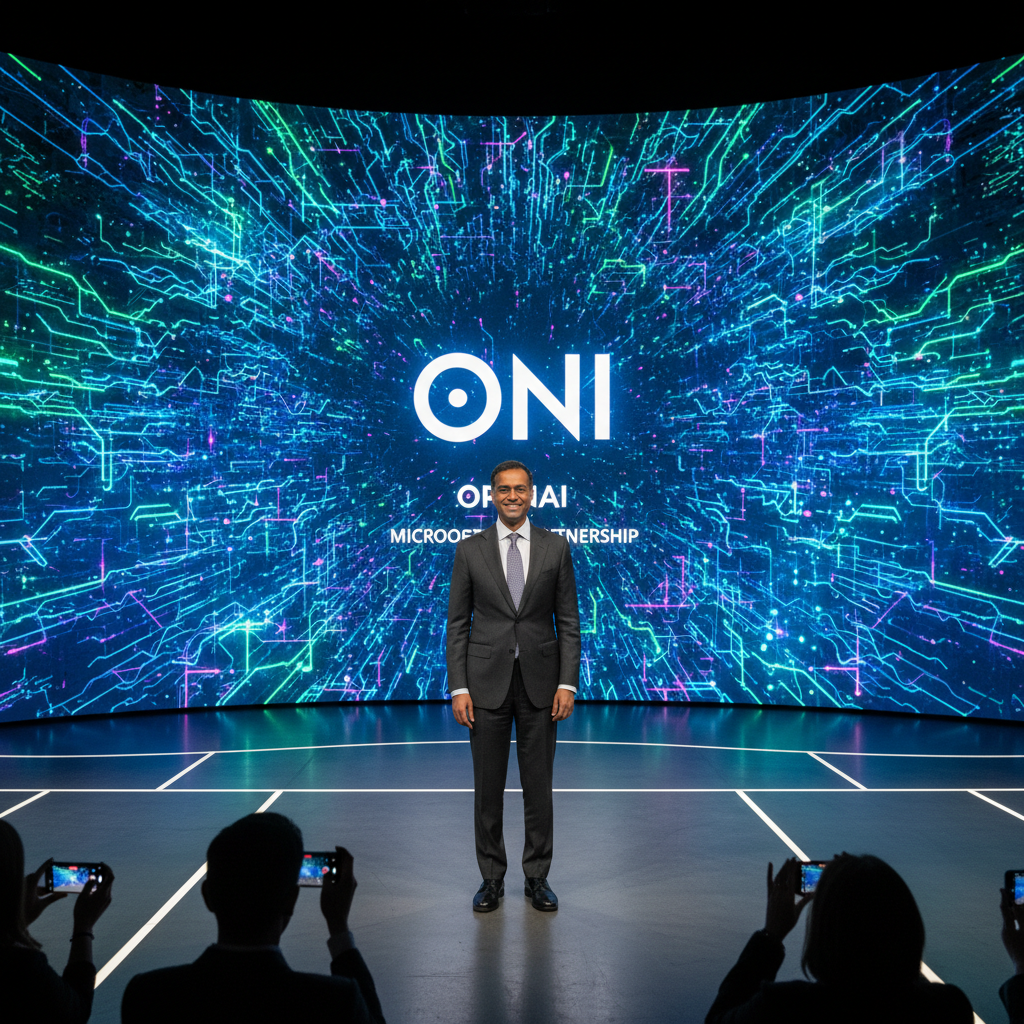
Satya Nadella's recent statement on exploiting the new OpenAI deal is more than just a soundbite - it's a declaration of war in the cloud AI market. By leveraging OpenAI's technology to offer its cloud customers unparalleled AI capabilities without incurring the costs, Microsoft is poised to disrupt the status quo and leave its competitors scrambling to catch up. This move is the culmination of a series of strategic decisions made by Nadella since his appointment as CEO in 2014, including the acquisition of Revolution Analytics in 2015 and the launch of Azure Machine Learning in 2016.
Historical Context: The Road to AI Dominance
Microsoft's journey to AI dominance began with the appointment of Satya Nadella as CEO in 2014. Nadella's vision for a cloud-first, mobile-first strategy laid the groundwork for the company's future AI ambitions. The acquisition of Revolution Analytics in 2015 and the launch of Azure Machine Learning in 2016 marked significant milestones in Microsoft's AI journey. The company's $1 billion investment in OpenAI in 2019 further solidified its commitment to AI research and development. With the new OpenAI deal, Microsoft is now poised to reap the rewards of its strategic investments and leapfrog its competitors. Related: OpenAI.
Competitive Analysis: The AI Landscape Shifts
The implications of Microsoft's OpenAI deal are far-reaching, with significant consequences for its competitors. Amazon Web Services (AWS) and Google Cloud Platform (GCP) will need to reassess their AI strategies in response to Microsoft's aggressive move. AWS, in particular, will face intense pressure to match Microsoft's AI offerings, given its strong presence in the cloud market. GCP, on the other hand, may need to rely on its strengths in AI research and development to stay competitive. IBM, with its Watson AI platform, will also need to adapt to the new landscape and find ways to differentiate its offerings from Microsoft's. Related: Microsoft.
Technical Deep Dive: The AI Architecture Advantage
Microsoft's ability to offer OpenAI's technology to its cloud customers without incurring costs is a significant advantage, but it's not just about the cost savings. The company's AI architecture, built around Azure Machine Learning and the Microsoft Cognitive Toolkit (CNTK), provides a scalable and flexible framework for deploying AI models. The integration of OpenAI's technology will further enhance this architecture, enabling Microsoft to offer its customers a comprehensive AI platform that spans machine learning, natural language processing, and computer vision. This will be a major differentiator for Microsoft, as its competitors will struggle to match the breadth and depth of its AI offerings. For related analysis, see Edge Copilot: AI-Driven Tab Analysis Revolutionizes Browsing.
Second-Order Effects: The AI Talent Wars
The Microsoft-OpenAI deal will have significant second-order effects, including the escalation of the AI talent wars. As Microsoft ramps up its AI efforts, it will need to attract and retain top AI talent to develop and deploy its AI models. This will lead to a surge in demand for AI professionals, driving up salaries and creating a war for talent among tech companies. Startups and smaller companies will struggle to compete with the likes of Microsoft, AWS, and GCP, leading to a consolidation of AI talent in the hands of a few large players. This, in turn, will create new opportunities for AI-focused startups and companies that can provide innovative AI solutions to enterprises. Related: OpenAI.
Forward-Looking Predictions: The AI Future
Looking ahead, the Microsoft-OpenAI deal signals a future where AI is ubiquitous and deeply integrated into enterprise technology. We predict that Microsoft will become the leader in the cloud AI market, with AWS and GCP playing catch-up. The company's AI offerings will drive significant revenue growth, with Azure Machine Learning and the OpenAI technology platform becoming major contributors to Microsoft's bottom line. As the AI landscape continues to evolve, we expect to see significant advancements in areas like edge AI, explainable AI, and AI ethics. The future of enterprise tech will be shaped by AI, and Microsoft is now poised to be at the forefront of this revolution.