

Carbon Nanotube Wiring Revolution
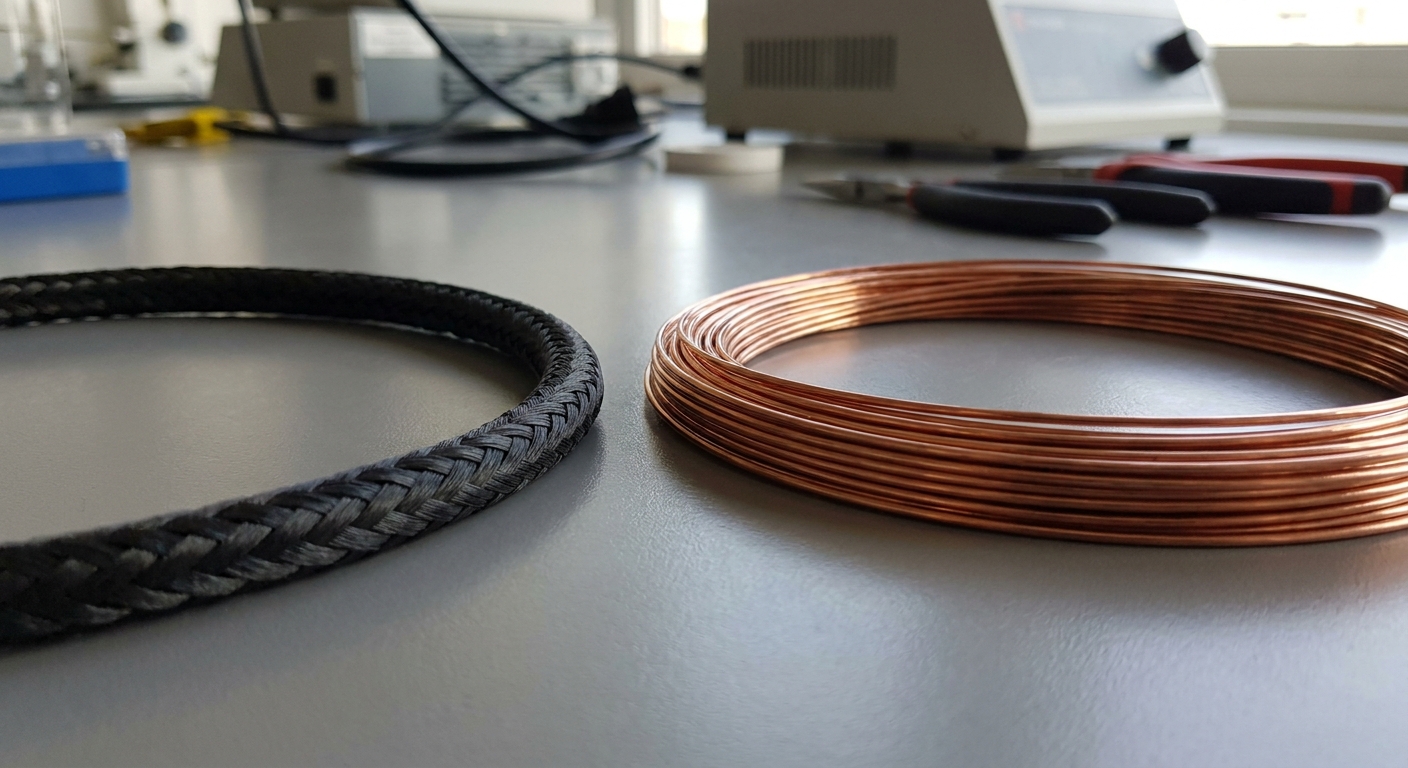
The quest for a superior wiring material has been an ongoing saga in the world of electronics. For decades, copper has reigned supreme due to its excellent conductivity, durability, and affordability. However, with the rise of nanotechnology, researchers have been exploring alternative materials that could potentially dethrone copper. The recent breakthrough in carbon nanotube wiring, which has achieved conductivity comparable to copper, marks a significant milestone in this journey. But what led to this development, and how will it impact the electronics industry?
Historical Context: The Rise of Nanotechnology
In the early 2000s, nanotechnology started gaining traction as a field of research, with scientists exploring its potential applications in various domains, including materials science. One of the key areas of focus was the development of carbon nanotubes, which were discovered in 1991 by Sumio Iijima. These tiny, cylindrical structures exhibited remarkable electrical, thermal, and mechanical properties, making them an attractive candidate for wiring applications. Over the years, researchers have made steady progress in improving the conductivity of carbon nanotubes, with notable advancements in 2013 and 2019. The latest breakthrough, which has achieved copper-like conductivity, is a culmination of these efforts.
Competitive Implications: A Threat to Copper's Dominance
The emergence of carbon nanotube wiring as a viable alternative to copper has significant implications for the electronics industry. Companies like Intel, Samsung, and TSMC, which have heavily invested in copper-based infrastructure, may need to reassess their strategies. On the other hand, startups and research institutions that have been working on nanotechnology-based solutions may find themselves at the forefront of innovation. The shift towards carbon nanotube wiring could also lead to a reduction in electronic waste, as these materials are generally more environmentally friendly than copper. Furthermore, the use of carbon nanotubes could enable the development of more compact, flexible, and efficient electronic devices, which could disrupt the status quo in the consumer electronics market.
Technical Deep Dive: The Science Behind Carbon Nanotube Wiring
Carbon nanotubes owe their exceptional conductivity to their unique structure, which consists of a cylindrical arrangement of carbon atoms. These atoms are bonded together through strong covalent bonds, resulting in a material that is both incredibly strong and highly conductive. The key challenge in using carbon nanotubes for wiring has been to overcome their inherent resistance, which arises from the scattering of electrons at the nanotube interfaces. Researchers have addressed this issue by developing techniques to align the nanotubes, reduce defects, and improve their surface properties. The latest breakthrough has achieved a conductivity of 100,000 Siemens per meter, which is comparable to that of copper. This has been made possible through the use of advanced fabrication techniques, such as molecular self-assembly and nano-patterning.
Second-Order Effects: A New Era of Electronic Devices
The advent of carbon nanotube wiring is likely to have far-reaching consequences, extending beyond the realm of traditional electronics. One potential application is in the development of wearable devices, which could benefit from the flexibility and compactness of carbon nanotube-based wiring. Another area of exploration is in the field of neuromorphic computing, where carbon nanotubes could be used to create ultra-efficient, brain-inspired electronic systems. The use of carbon nanotubes could also enable the development of more sophisticated sensors, which could find applications in fields like healthcare, automotive, and aerospace. As researchers continue to push the boundaries of carbon nanotube technology, we can expect to see innovative devices and systems that were previously unimaginable.
Builder Perspective: What Founders and Engineers Should Know
For founders and engineers working on electronic devices, the emergence of carbon nanotube wiring presents both opportunities and challenges. On the one hand, this technology has the potential to enable the development of more efficient, compact, and flexible devices. On the other hand, it requires a deep understanding of nanotechnology, materials science, and advanced fabrication techniques. To stay ahead of the curve, founders and engineers should invest in research and development, collaborate with experts in the field, and explore new applications and use cases for carbon nanotube wiring. They should also be prepared to address the potential challenges associated with this technology, such as scalability, cost, and reliability.
Forward-Looking Predictions: A Future Without Copper
As carbon nanotube wiring continues to advance, we can expect to see significant changes in the electronics industry. Within the next 5 years, we predict that carbon nanotube-based wiring will become a mainstream technology, with applications in a wide range of electronic devices. This will lead to a reduction in the demand for copper, which could have significant implications for the global commodities market. By 2030, we expect to see the development of entirely new classes of electronic devices, which will be made possible by the unique properties of carbon nanotubes. These devices will be more efficient, compact, and flexible than their copper-based counterparts, and will enable new applications and use cases that we cannot yet imagine. As the world moves towards a future without copper, one thing is certain – the electronics industry will never be the same again.