

Maine's Data Center Gambit
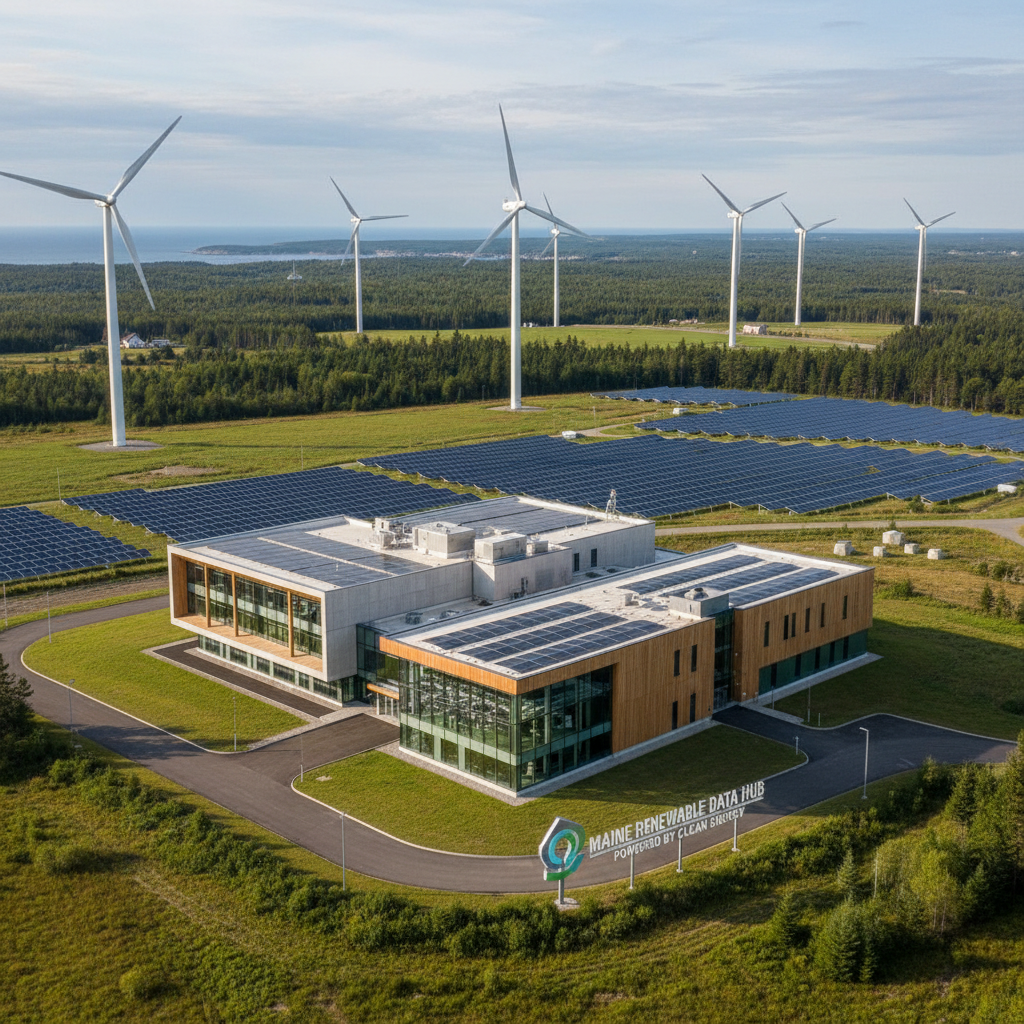
Maine's governor has dealt a significant blow to environmentalists and a boost to tech investors by vetoing L.D. 307, a bill that would have imposed the country's first statewide moratorium on new data centers. This move sets the stage for Maine to become a major data hub in the Northeast, with significant implications for competitors, the environment, and the local economy.
Historical Context: A Growing Industry
The data center industry has been growing rapidly over the past five years, with investments pouring in from major players like Amazon, Google, and Microsoft. According to a report by Synergy Research Group, the global data center market grew by 16% in 2022, with the Northeast region being a major hub. Maine, with its low energy costs, favorable business climate, and proximity to major population centers, is well-positioned to capitalize on this trend. The state has already seen significant investment in data centers, with companies like NextEra Energy and Lincoln Energy investing heavily in the region. Our space-based data centers analysis explores this further.
Competitive Analysis: Who Wins, Who Loses
The veto of L.D. 307 is a major win for data center operators and investors, who can now continue to build and expand their facilities in Maine without the threat of a moratorium. This is likely to attract even more investment to the state, as companies look to take advantage of its favorable business climate and low energy costs. On the other hand, the veto is a loss for environmental groups, who had been pushing for the moratorium as a way to limit the environmental impact of data centers. The decision is also likely to put pressure on neighboring states, such as New Hampshire and Vermont, which may see an influx of data center development as companies look to capitalize on the region's growing tech industry. Related: Maine.
Technical Deep Dive: The Sustainability Challenge
Data centers are significant consumers of energy, with the average facility using around 30-40 megawatts of power. This has raised concerns about the environmental impact of the industry, particularly in terms of carbon emissions and water usage. However, the industry has been working to address these concerns, with many data centers now using renewable energy sources, such as wind and solar power, and implementing water-saving measures. In Maine, data centers are required to use at least 50% renewable energy, and many facilities are exceeding this target. For example, NextEra Energy's data center in Maine uses 100% renewable energy and has implemented a range of water-saving measures, including a closed-loop cooling system. Related: data centers.
Second-Order Effects: A Northeast Data Hub
The veto of L.D. 307 is likely to have significant second-order effects, as Maine becomes a major data hub in the Northeast. This could lead to an influx of tech jobs and investment in the region, as companies look to capitalize on the state's favorable business climate and low energy costs. It could also lead to increased investment in renewable energy, as data centers look to reduce their environmental impact. However, it could also lead to increased pressure on the state's energy grid, as well as concerns about the environmental impact of the industry. To mitigate these risks, the state will need to invest in grid infrastructure and implement policies to support the development of renewable energy. Related: Maine.
Forward-Looking Predictions
Over the next five years, we predict that Maine will become a major data hub in the Northeast, with significant investment in data centers and related infrastructure. We expect to see at least five new data centers built in the state, with a total investment of over $1 billion. We also expect to see significant growth in the number of tech jobs in the region, with at least 1,000 new jobs created. However, we also predict that the state will face significant challenges in terms of energy supply and environmental impact, and will need to invest in grid infrastructure and renewable energy to support the growth of the industry. By 2030, we expect Maine to be one of the top five data center hubs in the country, with a thriving tech industry and a strong reputation for sustainability.