

Next Gen Space Telescopes: Roman's Launch Sets Stage for Cosmic Discovery
NASA's upcoming Roman Space Telescope launch in September will revolutionize space exploration with its 100x larger field of view than Hubble. What does this...
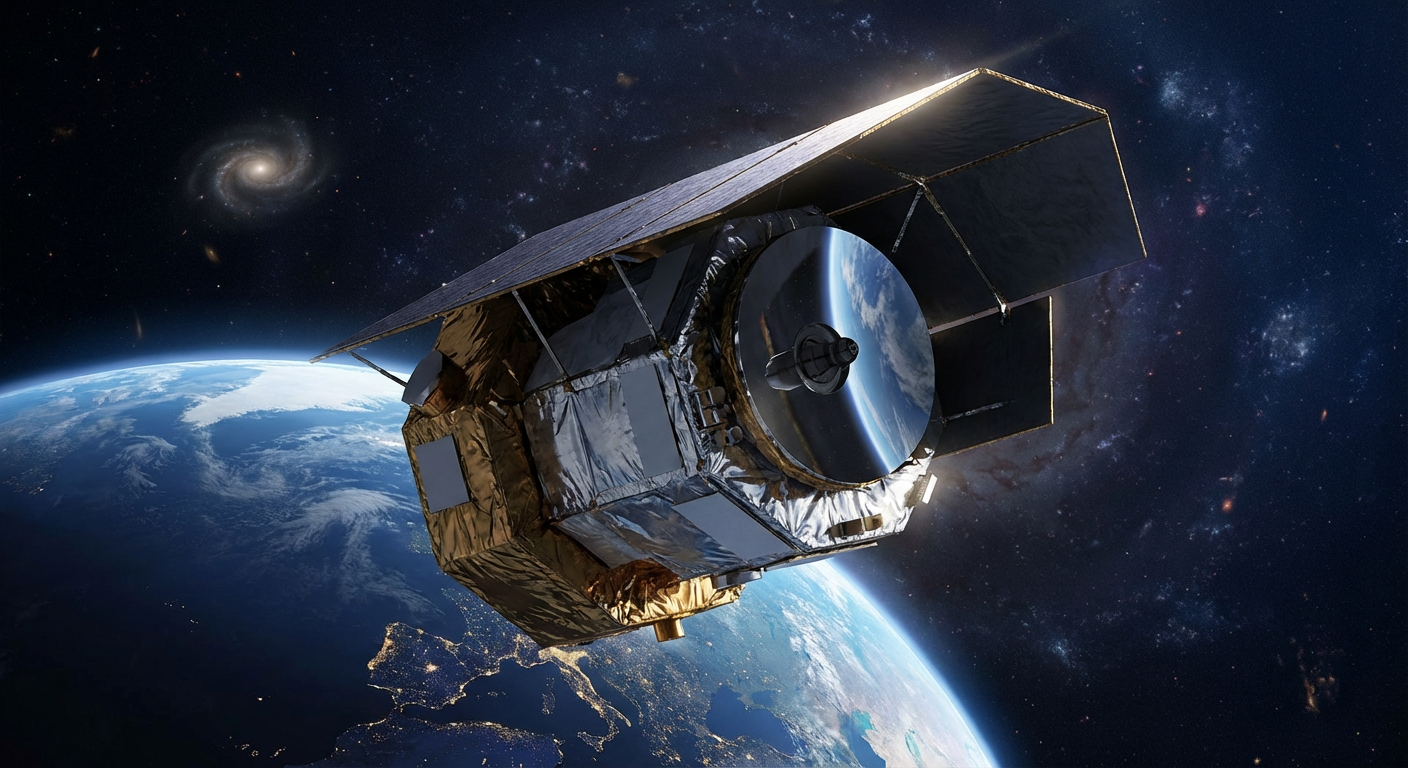
The announcement of NASA's Nancy Grace Roman Space Telescope launch in September marks a significant milestone in the history of space exploration. With its field of view 100 times larger than the iconic Hubble Space Telescope, Roman is poised to revolutionize our understanding of the cosmos. To appreciate the significance of this launch, it's essential to consider the historical context that has led to this moment.
Historical Context: A Legacy of Innovation
The Hubble Space Telescope, launched in 1990, has been a cornerstone of space exploration for over three decades. Its numerous discoveries, including determining the rate of expansion of the universe and capturing stunning images of distant galaxies, have paved the way for future space telescopes. The Roman Space Telescope, named after NASA's first chief astronomer, Nancy Grace Roman, is the next step in this legacy of innovation. With its advanced technology and unprecedented field of view, Roman will enable scientists to study the universe in greater detail than ever before.
Competitive Implications: A New Era of Space Exploration
The launch of the Roman Space Telescope will have significant implications for the space industry. SpaceX, which will be carrying the Roman Space Telescope aboard its Falcon Heavy rocket, will further solidify its position as a leading player in the commercial space industry. The success of this launch will also demonstrate the viability of public-private partnerships in space exploration, setting a precedent for future collaborations. Meanwhile, other space agencies and private companies, such as the European Space Agency and Blue Origin, will be watching the Roman Space Telescope's progress closely, as they develop their own next-generation space telescopes.
Technical Deep Dive: The Science Behind Roman's Capabilities
So, what makes the Roman Space Telescope so powerful? Its advanced technology includes a 2.4-meter primary mirror, which will allow it to capture more light and observe fainter objects than Hubble. The telescope's field of view, which is 100 times larger than Hubble's, will enable scientists to study vast areas of the sky in a single observation. Roman will also be equipped with a advanced spectrograph, which will allow scientists to analyze the composition and properties of distant objects in unprecedented detail. This combination of advanced technology and unprecedented field of view will make Roman an unparalleled tool for space exploration.
Second-Order Effects: The Future of Space Discovery
The launch of the Roman Space Telescope will have far-reaching consequences for the future of space discovery. With its advanced capabilities, Roman will enable scientists to study the universe in greater detail than ever before, leading to new discoveries and a deeper understanding of the cosmos. The telescope's observations will also have significant implications for the study of dark energy, dark matter, and the formation of galaxies. As Roman begins to return its first images and data, the scientific community will be eagerly awaiting the results, which will likely lead to a new era of space exploration and discovery.
Builder Perspective: What Founders and Engineers Can Learn from Roman
So, what can founders and engineers learn from the Roman Space Telescope's development and launch? Firstly, the importance of collaboration and partnership cannot be overstated. The success of the Roman Space Telescope is a testament to the power of public-private partnerships in space exploration. Secondly, the development of advanced technology, such as Roman's primary mirror and spectrograph, requires significant investment and expertise. Finally, the launch of the Roman Space Telescope demonstrates the importance of perseverance and long-term planning in space exploration. The development of Roman has taken over a decade, and its launch is a reminder that space exploration is a marathon, not a sprint.
Forward-Looking Predictions: The Future of Space Exploration
So, what's next for space exploration? With the launch of the Roman Space Telescope, we can expect a new era of discovery and exploration. Over the next decade, we will see significant advances in our understanding of the universe, from the formation of galaxies to the properties of dark matter and dark energy. The Roman Space Telescope will also pave the way for future space telescopes, such as the James Webb Space Telescope and the Euclid mission, which will further expand our understanding of the cosmos. As we look to the future, one thing is certain: the launch of the Roman Space Telescope marks the beginning of an exciting new era in space exploration, and we can expect significant discoveries and advancements in the years to come.